All You Need To Know About Underground Drainage Pipes
Underground drainage pipes are the hidden workhorses of your home’s plumbing system they silently carry away stormwater, sewage, and waste under your yard, street, or foundation. While you may never see them, any failure can lead to serious problems: leaks, flooding, or even structural damage.
In Florida, this issue is especially critical. Thanks to our sandy soil, high water table, and frequent heavy rains (especially around hurricanes), proper drainage is not optional it’s essential. Many homeowners only think about drainage after a problem hits: a soggy lawn in Coral Gables, a backed-up sewer line in Orlando, or persistent wet spots near foundations in Tampa.
This guide walks you through everything you need to know about underground drainage pipes from what they do, to how they work, the best materials, installation, and maintaining them for long life.
What Is Underground Drainage?
At its core, underground drainage refers to the system of pipes below ground that carry water away from your property. But not all drainage is the same.
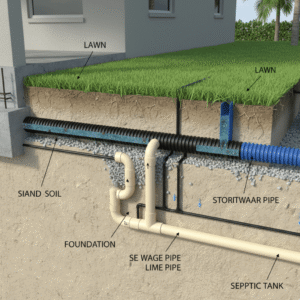
- Sewer lines carry wastewater and sewage from inside your home to either a municipal sewer system or a private septic system.
- Stormwater drains, on the other hand, handle rainwater from your roof, driveway, or yard and direct it to a safe discharge point.
Both systems are critical: a clogged sewer pipe can cause nasty backups, while a poorly designed stormwater system can flood your yard or contribute to soil erosion.
Underground drainage is vital for both residential homes (single-family houses, condos) and commercial buildings (restaurants, offices, hotels) in Florida. Without proper drainage, water builds up, causing damage to foundations, landscaping, and local infrastructure.
History and Evolution of Underground Drainage Systems
It’s interesting to look back at how drainage has evolved. Early drainage systems used clay or concrete pipes materials that were heavy, durable, but difficult to work with. As technology and materials advanced:
- Mid-20th century: Clay still common, cast-iron used for high-load commercial systems.
- Late 20th century: Plastics like PVC and HDPE became widespread. These materials are lightweight, corrosion-resistant, and much easier to install.
- Today: We also use trenchless installation methods, reducing disruption to landscaping and pavement.
In Florida, this evolution is particularly relevant. Many older homes (in places like Jacksonville or St. Petersburg) may still have clay or cast-iron drainage systems, while new construction (in booming metro areas) favors PVC or HDPE.
Types of Underground Drainage Pipes
Plastic Pipes for Underground Drainage
Overview of Plastic Pipes (PVC, CPVC, HDPE)
Plastic drainage pipes are among the most popular choices today, especially for homes and light commercial properties.
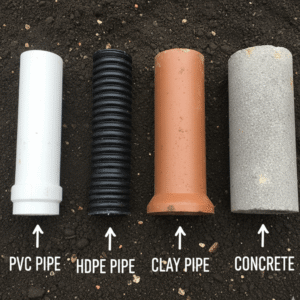
- PVC (Polyvinyl Chloride): Very common, widely used for sewer and drainage applications.
- HDPE (High-Density Polyethylene): Flexible, strong, and ideal when soil movement is a concern.
CPVC (Chlorinated PVC): Less common for underground drainage, more used for water supply lines, but sometimes seen in specialty drain systems.
Types of Plastic Pipes
- Solid-wall PVC or HDPE: Smooth interior, great for carrying sewage or stormwater.
- Perforated pipes: Small holes along the side allow water to seep in or out — often used in French drains or subsoil drainage.
Advantages of Plastic Pipes
- Lightweight: Easier and cheaper to transport and install.
- Corrosion resistance: Unlike metal, plastic doesn’t rust.
- Longevity: When installed properly, can last decades.
- Flexibility (especially HDPE): Adapts to ground movement, which is helpful in areas with shifting soil.
Disadvantages of Plastic Pipes
- UV sensitivity: Not ideal if exposed to sunlight — must be buried.
- Pressure limits: Some plastic pipes can’t handle very high loads unless properly rated.
- Thermal expansion: Plastic expands and contracts with temperature.
Other Materials for Underground Drainage Pipes
Concrete Pipes
- Very strong and durable.
- Common in heavy-duty applications (large sewer mains, stormwater systems).
- High load-bearing capacity.
Clay Pipes
- Traditional material.
- Chemical resistant, but brittle.
- Vulnerable to tree root intrusion over time.
Cast Iron Pipes
- Strong, sound-dampening.
- Often used in commercial installations.
- Very heavy and labor-intensive to install, but has a long history.
Comparison Table of Pipe Materials
Material | Durability | Cost | Best Applications | Limitations |
PVC (solid) | High | Moderate | Residential sewer, drainage | Sensitive to UV, expansion |
HDPE (solid) | Very High | Higher | Flexible layouts, shifting soil | Cost, requires special welding |
PVC (perforated) | Medium | Moderate | French drains, subsoil drainage | Less structural strength |
Concrete | Very High | High | Stormwater, large mains | Heavy, expensive to install |
Clay | High | Moderate | Traditional sewer systems | Brittle, root penetration |
Cast Iron | High | Very High | High-load commercial use | Heavy, corrosion risk if unprotected |
Components and Functioning of an Underground Drainage System
To understand how drainage pipes work, it helps to know the system’s key parts:
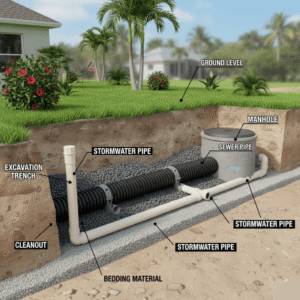
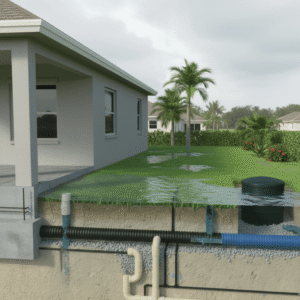
- Trench & Bedding: The trench is dug to house the pipe. Bedding material (like sand or gravel) supports the pipe, keeping it stable.
- Pipes & Joints: The pipes are laid with proper slope, joined using solvent weld, rubber gaskets, or specialized fittings.
- Manholes, Catch Basins & Cleanouts: These provide access for inspection and maintenance. Cleanouts are code-mandated in Florida (e.g., per Florida Building Code and cleanout intervals).
- Flow Slope & Direction: Proper grading ensures water flows away from structures.
- Perforated vs Solid Pipes: Perforated pipes let water in (or out) useful in drainage fields or French drains. Solid pipes carry flow without leakage.
Installation of Underground Drainage Pipes
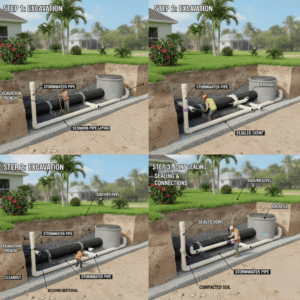
Step-by-Step Installation Guide
- Site Survey & Planning
- Inspect the property for slope, soil type, and existing structures.
- In Florida, check for high water table or underground utilities.
- Mark routes, cleanouts, and discharge points.
- Inspect the property for slope, soil type, and existing structures.
- Trenching & Bedding
- Excavate trench to required depth.
- Lay bedding (sand, gravel) to support pipe uniformly. According to Florida Building Code, trenches must be properly backfilled to avoid alignment issues.
- Over-excavate if soil is rocky or unstable, then backfill with compacted granular material.
- Excavate trench to required depth.
- Laying the Pipes with Proper Slope
- Ensure slope meets local code e.g., gravity sewer lines shouldn’t reduce in size in direction of flow.
- Use level or laser tools to maintain consistent gradient.
- Joint Connections & Sealing
- Use solvent welding (for PVC), or mechanical / rubber gasket joints as required.
- Follow ASTM or manufacturer specifications.
- For flexible HDPE, heat-fusion or electrofusion may be used.
- Use solvent welding (for PVC), or mechanical / rubber gasket joints as required.
- System Testing
- Pressure or flood test to confirm there are no leaks.
- Under Florida Building Code, the drain system should be tested as per Section 312.
- For storm drains, also test in accordance with Florida’s code.
- Pressure or flood test to confirm there are no leaks.
- Backfilling & Finishing
- Carefully backfill the trench in layers (6-inch lifts), compacting each layer.
- Avoid rocks or debris near pipe.
- Restore the surface: turf, concrete, or landscaping.
Unique Considerations for Florida
- Soil Type & Water Table: Florida’s sandy soil doesn’t compact well, making pipe shifting a real risk.
- Heavy Rain & Hurricane Resistance: Drain lines must handle high volumes and resist uplift; proper cleanouts are critical.
- Local Codes & Permits: The Florida Building Code (Plumbing) outlines standards for storm drainage, pipe materials, and cleanouts.
- Setbacks: On-site sewage disposal systems (if used) must maintain at least 5 ft from building foundations.
Maintenance of Underground Drainage Pipes
Regular Maintenance Tips
Maintaining your drainage system is key to long-term performance. Here’s what every Florida homeowner should do:
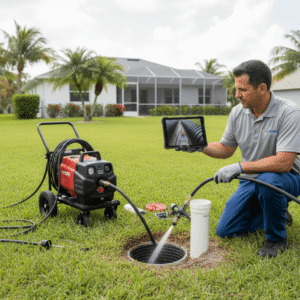
- Pipe Inspections: Regular visual checks through cleanouts or manholes. Look for signs of cracking, root intrusion, or sagging.
- Cleaning: Periodically flush pipes, especially after heavy storms. Roots or debris can lead to clogs.
- Check Pipe Slope: Ensure the flow rate remains consistent; soil settling may change pipe grade.
- Joint Connections: Inspect fittings, seals, or gaskets — if they’re failing, leaks may develop.
- Root Intrusion Prevention: Use root barriers or chemical root control if tree roots are a problem.
Emergency Situations
Even the best systems can face emergencies:
- Flooding: In heavy rain, storm pipes may overflow. Make sure cleanouts are accessible.
- Sewer Backup: If this happens, shut off water use, avoid using fixtures, and call a licensed local plumber.
- Sudden Leaks: Use your main shut-off valve first, then have the affected area inspected.
Benefits of Proper Underground Drainage
Installing and maintaining a quality underground drainage system offers major advantages:
- Flood Prevention & Property Protection: Reliable drainage prevents water from pooling around foundations, reducing risk of structural damage.
- Reduced Soil Erosion: By directing water properly, you protect your landscaping, especially in sandy Florida yards.
- Foundation Safety: Proper drainage preserves the integrity of building foundations.
- Efficient Wastewater Management: Smooth flow keeps sewer systems healthy and reliable.
- Long-Term Savings: Prevention reduces costly repairs, backups, or pipe replacements.
Choosing the Right Drainage Pipe
Picking the best pipe depends on many factors:
- Material: Decide between PVC, HDPE, concrete, cast iron based on your needs.
- Budget: Plastic tends to be cheaper upfront; concrete may cost more but has high durability.
- Soil Type: Sandy or shifting soils may favor flexible materials like HDPE.
- Water Flow: High-volume stormwater requires pipes with good capacity.
- Load-Bearing: For driveways or roads, use stronger pipes.
- Chemical Exposure / Corrosive Environment: Some soils or groundwater may damage certain materials faster.
Also consider whether the system is residential or commercial commercial systems may need bigger pipes, stronger materials, and more frequent access points.
Common Problems and How to Solve Them
Here are typical issues Florida homeowners face and how to address them:
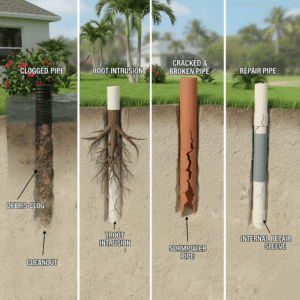
- Leaks & Cracks: Often due to shifting soil or poorly joined pipes. Solution: inspect, reseal joints, or replace damaged sections.
- Tree Root Damage: Roots infiltrate joints. Use mechanical root cutters, chemical control, or barriers.
- Blocked Pipes / Slow Drainage: Caused by debris, sand intrusion, or grease. Regular cleaning helps; install leaf guards or sediment traps.
- Soil Movement & Settling: Leads to sagging pipes. Re-grade trenches, re-bedd, or replace flexible pipe.
Corrosion / Degradation: Metal pipes (cast iron or ductile iron) can corrode over time. Use corrosion protection or switch to modern materials.
Local Considerations for Florida
Because of Florida’s climate and geology, you need to tailor your drainage system:
- Heavy Rain & Hurricanes: Systems must handle sudden surges; ensure drain pipes are large enough, and cleanouts are accessible.
- Humidity & High Water Table: Water may rise and exert pressure; use deep trenching or reinforced materials.
- Sandy Soil: Less structural support, risk of erosion: use proper bedding and flexible materials.
- Local Permits & Regulations: According to Florida Building Code Plumbing, storm drainage must follow code requirements, including testing and pipe sizing.
- Setbacks for Sewage Systems: On-site septic or plumbing systems must respect at least a 5 ft setback from buildings.
Get Expert Underground Drainage Solutions
If you’re ready to upgrade or install underground drainage pipes, contact us today. We’ll provide a free, detailed estimate tailored to your property, whether you’re in Miami, Tampa, Orlando, or anywhere else in Florida.
Services We Offer
- Drainage system design & installation
- Trenchless sewer repair
- Drain cleaning & maintenance
- Inspection & video pipe diagnostics
Areas We Service
We proudly serve:
- Southeast Florida (Miami-Dade, Broward)
- Central Florida (Orlando, Kissimmee)
- Gulf Coast (Tampa, St. Petersburg)
- The Panhandle and more
Related Resources
- Preventing sewer backups in Florida homes
- Choosing trenchless pipe repair vs traditional excavation
- Maintaining yard drainage systems with Florida’s sandy soil
Conclusion
Underground drainage pipes may operate out of sight, but they are central to keeping your property safe, dry, and structurally sound especially here in Florida. Because of our unique climate and soil, every decision from pipe material to installation method has to be smart, intentional, and code-compliant.
By choosing the right pipes, installing them correctly, and committing to regular maintenance, you’ll protect your home against flooding, erosion, and long-term damage. If you ever notice signs of trouble like pooling water, backups, or soggy patches don’t wait. Call a licensed plumber right away to inspect and fix the issue.
FAQs
What is the best type of pipe for underground drainage?
It depends on your soil, climate, and use. For many Florida homes, PVC or HDPE is ideal because of their resistance to corrosion and flexibility.
How deep should underground drainage pipes be buried in Florida?
According to local plumbing practices and building code, trenches should be deep enough to maintain proper slope and avoid exposure, and utilize proper bedding and compacted fill. (Always refer to code and a licensed plumber.)
How long do underground drainage pipes last?
PVC and HDPE pipes can last 50+ years with proper installation. Metal pipes, like ductile iron, may also last 80–100 years depending on soil conditions.
Can I connect different types of drainage pipes?
Yes, with compatible fittings (mechanical couplings, gaskets). But each joint must follow the manufacturer’s specs and local code.
How do I know if my underground drainage pipe is blocked or leaking?
Signs include slow drains, foul smells, wet spots in the yard, or unusually high water bills. Use cleanouts or video inspection to diagnose.