What Happens if My Heat Pump Leaks Water?

If you’ve noticed water pooling around your heat pump in Orlando or Daytona Beach, you’re not alone. Many homeowners see small drips and worry immediately, but understanding why leaks happen and what they mean can save you both stress and money.

In most cases, leaks are caused by condensation buildup, clogged drain lines, or frozen coils, not a catastrophic failure. Ignoring these warning signs, however, can lead to property damage, mold growth, higher energy bills, and system failure. This guide walks you through the causes, risks, fixes, preventive steps, and replacement advice  all backed by professional HVAC expertise and real-world homeowner examples.

heat pump leaking water

Is It Normal for a Heat Pump to Leak Water?

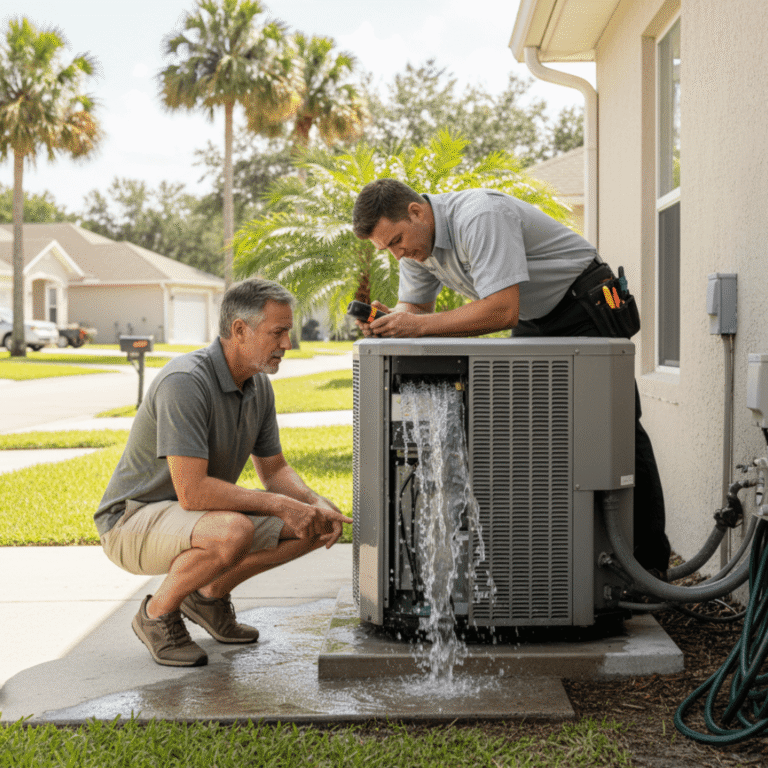
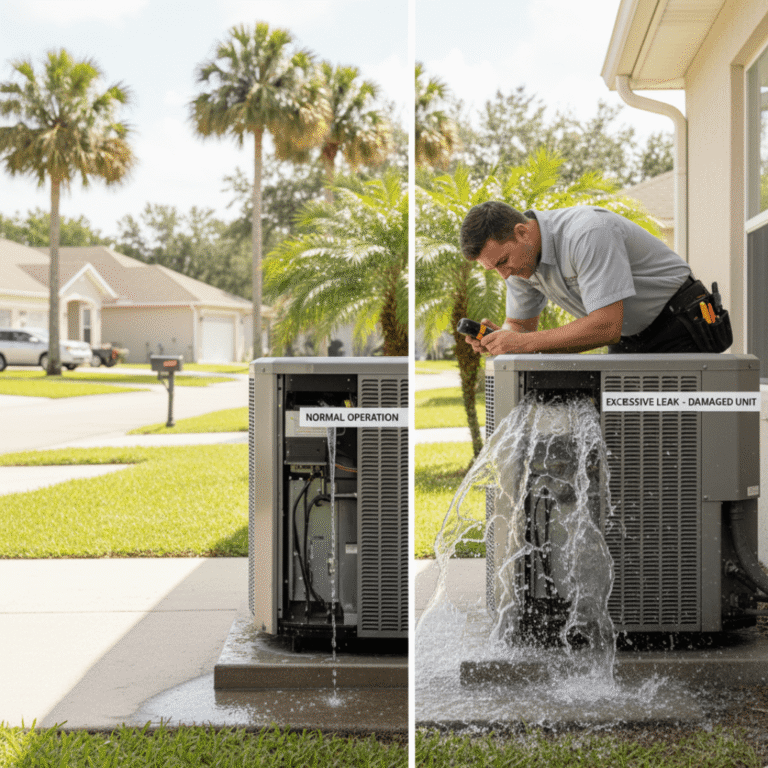
A small amount of water near your heat pump can be completely normal, especially during defrost cycles in winter or cooling mode in summer. Heat pumps naturally remove moisture from the air, which drains through a condensate line into a pan or directly outside. 

Signs of normal water activity:

  • Minor dripping outside during defrost cycles.
  • Small puddles near outdoor units after high-humidity days.
  • Temporary moisture around indoor air handlers due to condensation.

Red flags indicating a problem:

  • Large puddles inside your home near walls, ceilings, or floors.
  • Water dripping continuously from indoor units.
  • Musty smells or mold near the system.

Local Tip: If your heat pump in Orlando near Lake Eola Park or Daytona Beach near the Boardwalk shows consistent leaks, it’s often a drainage or installation issue, not a sign the unit needs immediate replacement.

Normal condensation vs heat pump water leak comparison — Orlando Florida home

What Can Happen if You Ignore a Heat Pump Water Leak?

Even small leaks shouldn’t be ignored. Here’s what can happen if the problem is left untreated:

Structural and Property Damage

Water pooling around the unit can seep into floors, drywall, or insulation. Over time, this can cause:

  • Warped flooring and soft spots on subflooring.
  • Mold growth that triggers health concerns.
  • Structural weakening of walls and ceilings.

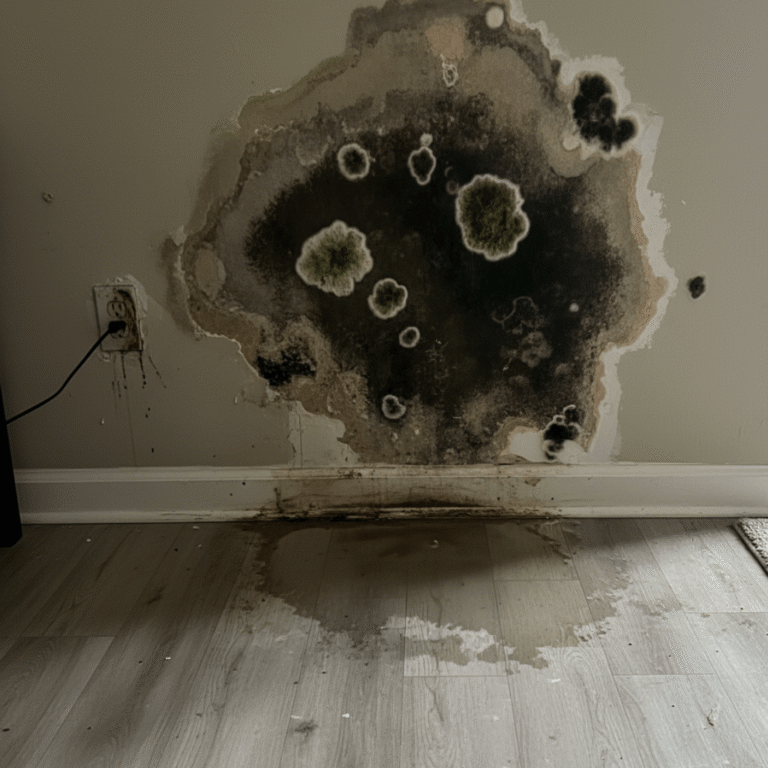
Local example: A homeowner in Daytona Beach Shores ignored a leaking heat pump for two weeks, resulting in $2,500 in drywall and flooring repairs.

Water damage on drywall and floor caused by leaking HVAC system in Daytona Beach

Excessive Corrosion and Component Wear

Water exposure accelerates the rusting of coils, brackets, and electrical components.

  • Corroded coils reduce efficiency.
  • Wiring damage can lead to short circuits.
  • Overall lifespan of your heat pump decreases by years.

Heat Pump Efficiency and Performance Issues

Leaks reduce heating and cooling performance. Common outcomes include:

  • Longer running times and higher energy bills.
  • Uneven temperature distribution across rooms.
  • Frequent cycling, which adds wear on components.

Indoor Air Quality Concerns

Standing water can contribute to:

  • Musty odors.
  • Mold spores circulating in HVAC ducts.
  • Allergic reactions or respiratory issues.

Expert Insight: Licensed HVAC technicians in Orlando recommend addressing leaks immediately to prevent air quality issues before hurricane season or summer humidity spikes.

Common Causes of a Heat Pump Leaking Water

Understanding the cause is the first step to fixing a leak.

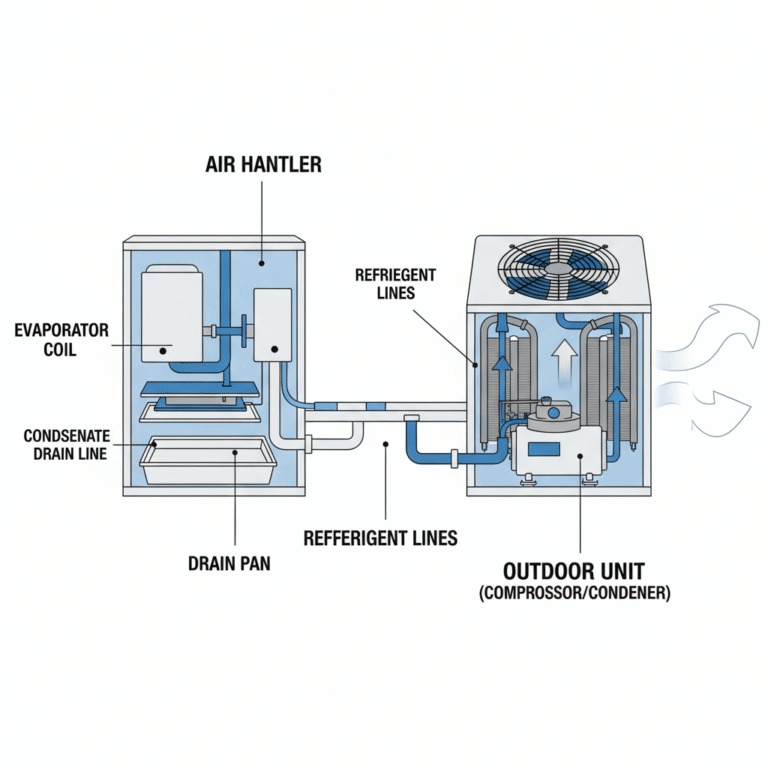
Diagram showing condensate drain line, evaporator coil, and drain pan in residential heat pump
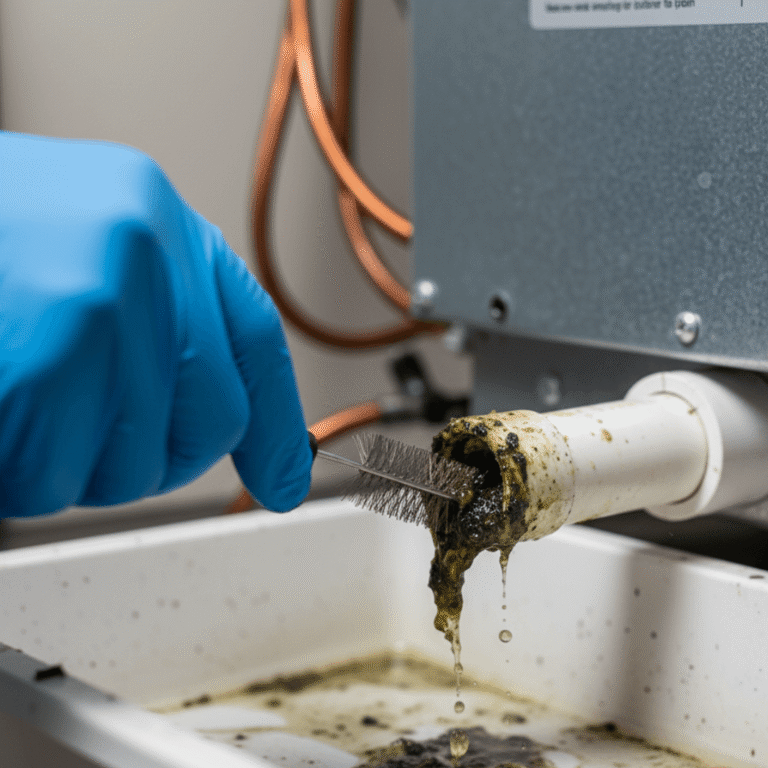
Clogged condensate drain line with debris being cleaned by HVAC technician

Clogged or Blocked Condensate Drain Line

  • Often caused by dust, dirt, or algae buildup.
  • Water backs up and overflows the drain pan.

Dirty or Frozen Evaporator Coils

  • Coils covered in dirt reduce heat transfer.
  • Ice forms in winter or high humidity conditions, melting later and leaking water.

Cracked or Damaged Drain Pan

  • Old or rusted pans can crack, allowing water to escape.
  • Common in units older than 8–10 years.

Improper Heat Pump Installation

  • Uneven units or improperly sloped drain lines lead to water pooling.
  • Even small misalignments can cause chronic leaks.

Malfunctioning Defrost System

  • Frost melts during the defrost cycle in winter.
  • Blocked drains or restricted flow leads to overflow.

Low Refrigerant Levels

  • Causes evaporator coil freezing.
  • When ice melts, water leaks from indoor or outdoor units.

Clogged Air Filters

  • Reduces airflow.
  • Increases condensation buildup.
  • Decreases overall efficiency.

Heat Pump Leaking Water Inside vs. Outside

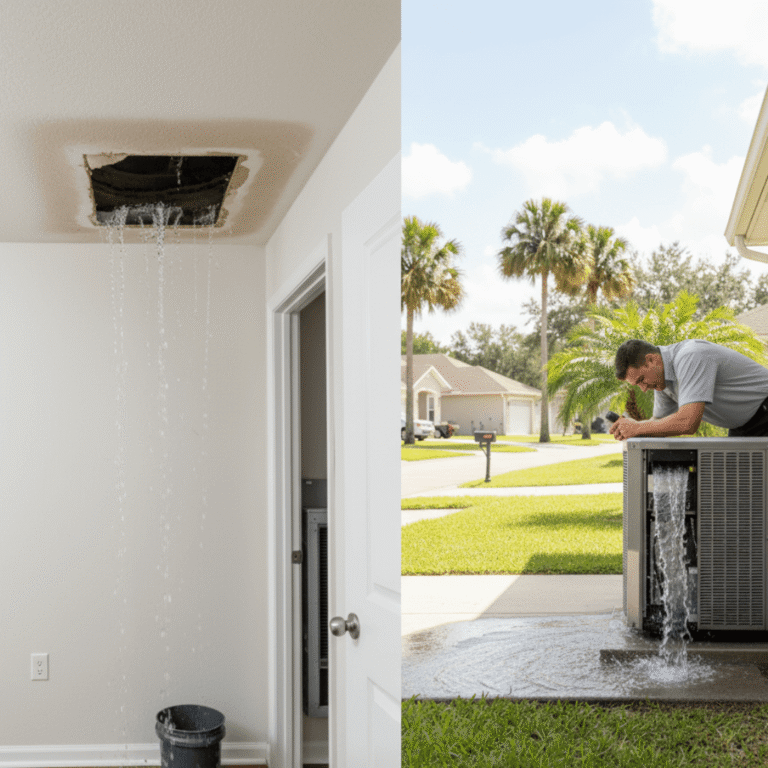
Indoor and outdoor heat pump leaking water comparison Orlando home example
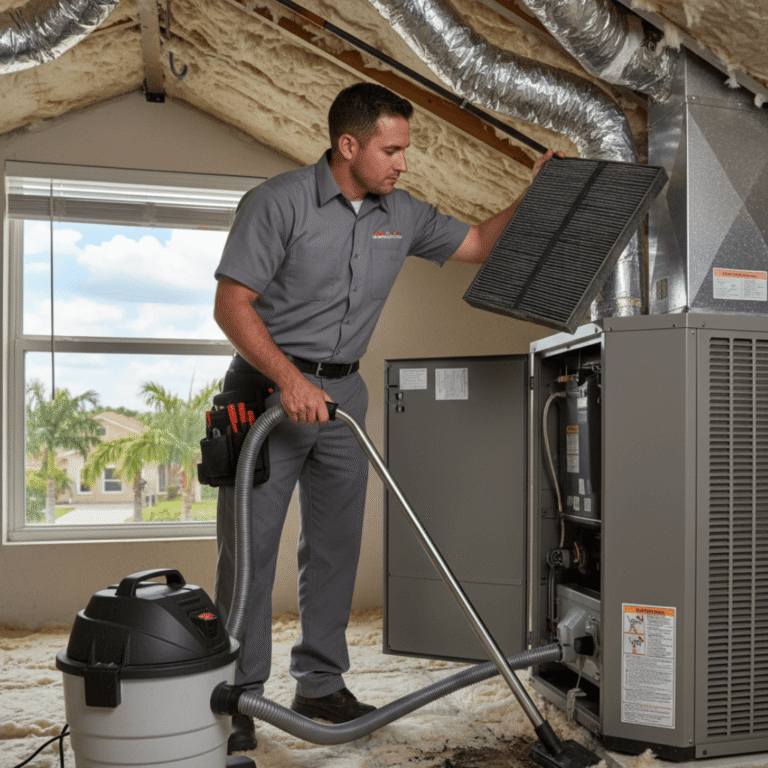
Technician cleaning heat pump drain line and replacing air filter in Florida home

Indoor Unit Leaking Water

  • Likely due to drain line blockages or unlevel air handler.
  • Can cause ceiling, wall, or floor damage.

Outdoor Unit Leaking Water

  • Minor water during defrost cycles is normal.
  • Excessive pooling indicates blocked drainage, coil icing, or refrigerant issues.

How to Fix a Heat Pump Leaking Water

Step-by-Step Troubleshooting

  1. Turn off the power to the unit.
  2. Check and clear the condensate drain line using a vacuum or approved cleaning solution.
  3. Replace dirty air filters every 1–3 months.
  4. Inspect the drain pan for cracks or rust.
  5. Ensure the unit is level.
  6. Restart and monitor for leaks.

⚠️ Note: Handling refrigerant or coil repairs requires a licensed HVAC technician.

When to Call an HVAC Technician

  • Persistent leaks after cleaning.
  • Ice buildup on coils or frost issues.
  • Electrical or musty odor concerns.

Local Tip: For fast, reliable service in Orlando near Universal Studios or Daytona Beach near the Daytona International Speedway, call a licensed professional for same-day inspection.

Preventing Future Heat Pump Water Leaks

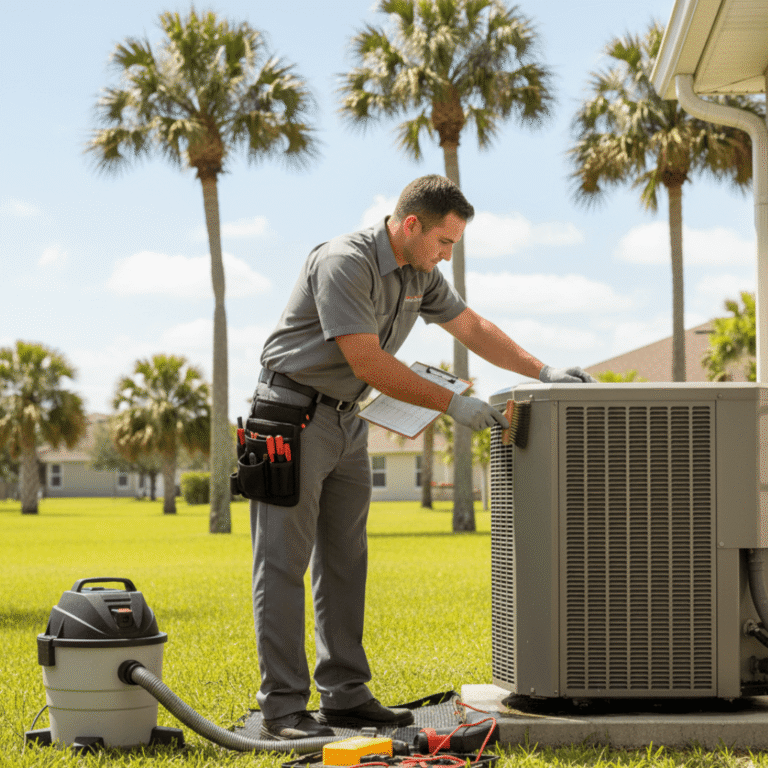
HVAC technician performing preventive maintenance on outdoor heat pump in Orlando backyard
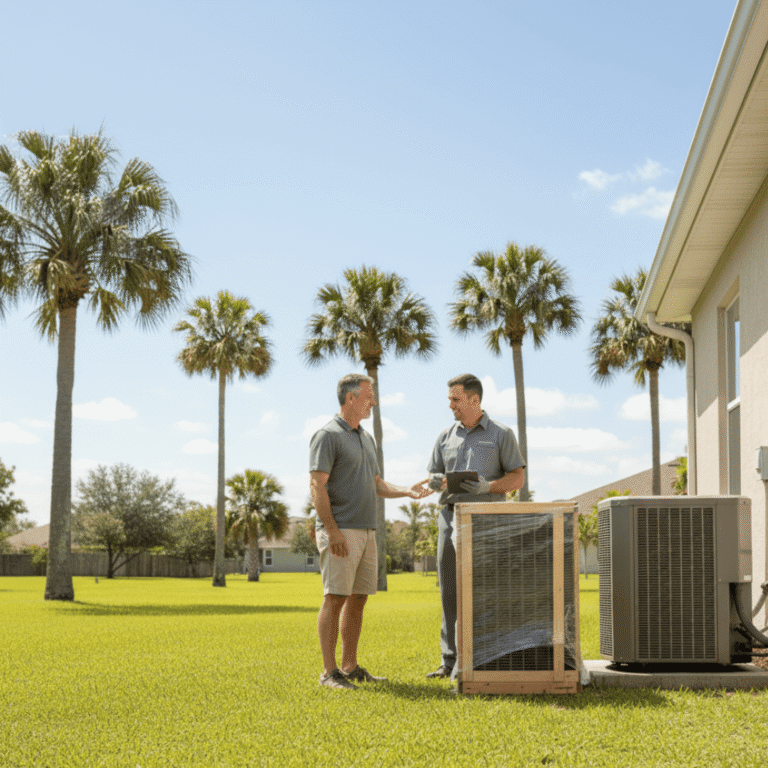
Homeowner consulting HVAC technician about replacing old heat pump with energy-efficient model

Schedule Routine HVAC Maintenance

  • Seasonal tune-ups detect issues early.
  • Reduces risks during Orlando summer heat or Daytona Beach winter storms.

Keep Air Filters Clean

Replace every 1–3 months to maintain airflow.

Ensure Proper Installation and Leveling

  • Prevents water pooling.
  • Avoids chronic leaks.

Clean Condensate Lines Regularly

  • Use vinegar or approved solutions.
  • Prevents algae and blockages.

When to Replace Your Heat Pump

  • Multiple repairs without resolution.
  • Age 10–15 years or older.
  • Poor efficiency, frequent breakdowns, or expensive recurring repairs.

Get Expert Help Fast

Don’t let a small leak become a major expense. Call Home Fixing Master at (877) 308-0201 for professional heat pump repair in Orlando or Daytona Beach. Licensed technicians ensure safe, fast, and effective repairs to protect your home and improve system efficiency.

Home Fixing Master HVAC technician shaking hands with homeowner in front of service van in Orlando FL

FAQs

Is it normal for my heat pump to leak water in winter?

Minor moisture during defrost is normal. Excessive pooling may indicate blocked drains or coil issues.

Can a leaking heat pump cause damage to my home?

Yes, standing water can damage floors, walls, and insulation, leading to mold or costly repairs.

How do I stop my heat pump from leaking water?

Clean drain line, check drain pan, replace filters, and call a professional if needed.

Should I turn off my heat pump if it’s leaking?

Yes, switch it off to prevent electrical or component damage until a technician inspects it.

How much does it cost to fix a leaking heat pump?

Minor fixes: $100–$250; major repairs (coils/pans): $500–$1,200.